
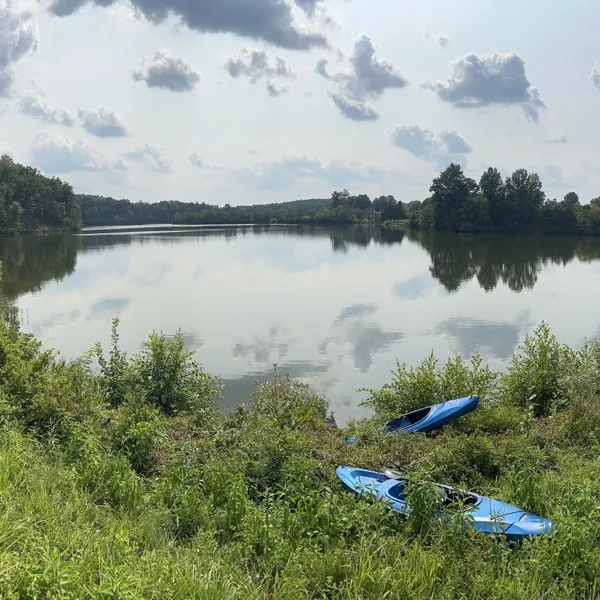
Out on the lake, on the western edge of the golf course at the Country Club of Culpeper, a pair of kayaks glided across the mirror image of a muted blue summer sky.
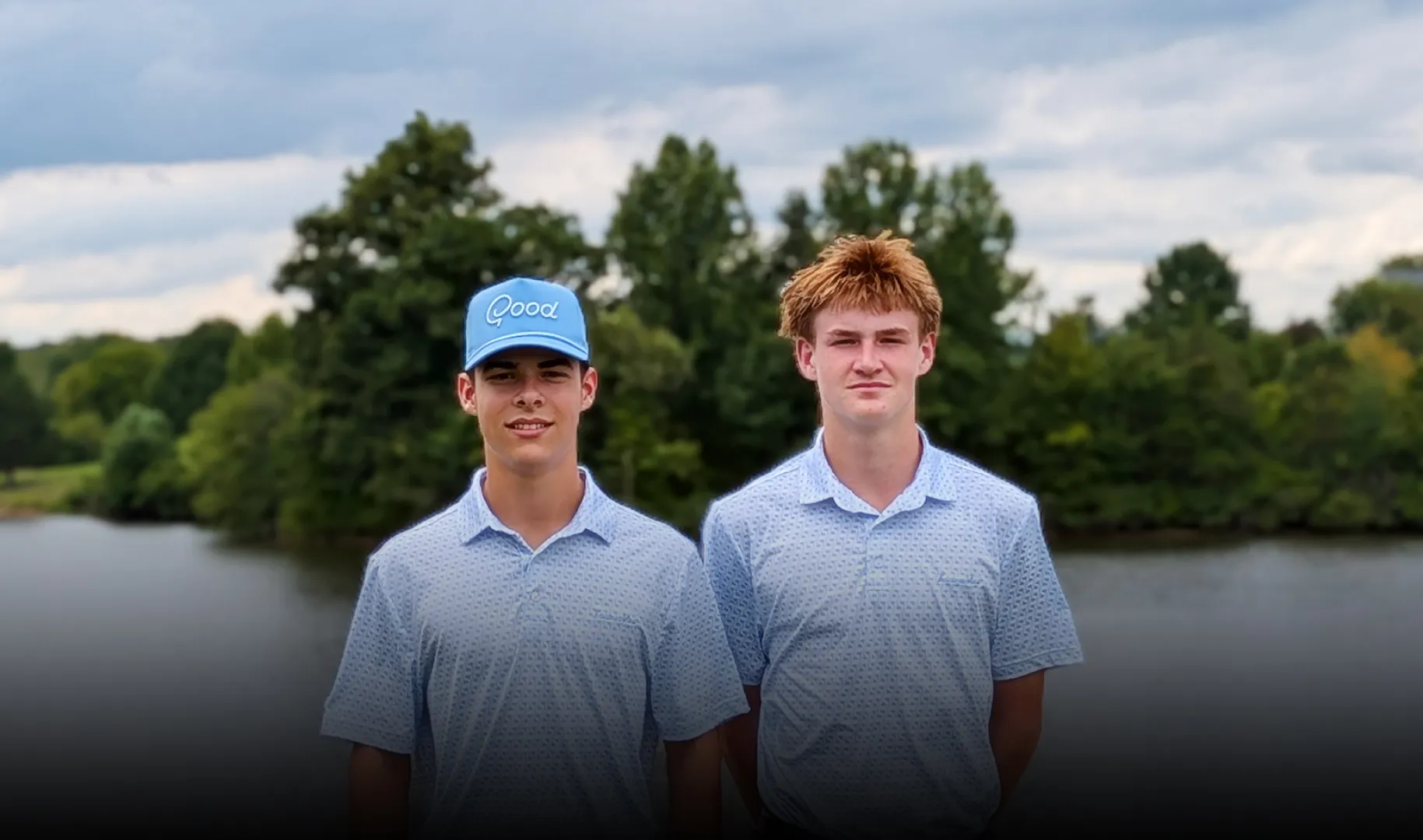
At the Hole 2 putting green overlooking the water, a group of teenagers paid little attention. They were here for Eastern View High School golf team tryouts. About 30 minutes in, Gavin Cain chipped in for a birdie—a short, controlled swing from just off the green—as teammates Jackson Castro and Andrew Tuggle stood nearby.
A child’s scream cut through the quiet.
A kid afraid of water, Cain thought.
Then men’s voices: “¡Ayuda! ¡Ayuda!”
Cain and Castro, 17-year-old Germanna Scholars, knew enough Spanish to understand.
Help! Help!
Some 50 yards out on Lake Culpeper, two men tried to cling to a half-submerged kayak while keeping a child, no older than 3, above the water. Only the little boy wore a life jacket; it was several sizes too large.
A steep, overgrown hillside and a boulder-strewn shoreline stood between them and the water. They paused long enough to figure out a way in that would get them closest to the kayakers, then sprinted toward the embankment as teammates called 911 and alerted their coach.
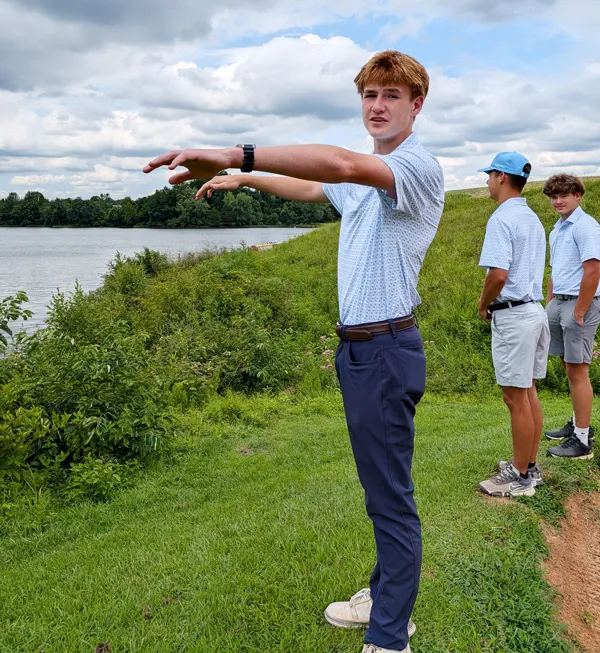
Out on the water, they spotted a second, upright kayak. Cain shouted for Tuggle to swim over to it. As Castro reached the struggling men, he asked in Spanish:
"Can you swim?"
They couldn't.
Cain and Castro got the child and one of the men into the upright kayak. He paddled the child to shore before returning to retrieve Castro and the remaining kayaker.
Then Cain and Tuggle retrieved the capsized kayak and brought it back to shore, where a crowd now gathered.
They’d acted so quickly that everyone was safely on shore before first responders arrived.
One of the men walked up to Cain.
“Thank you so much for saving my life.”
‘Heroic’
As the three teenagers gathered briefly before plunging into the lake, it was never a matter of if they would go. It was how.
Only afterward did they begin to appreciate the danger. People in distress can panic, instinctively pulling down would-be rescuers. Even strong swimmers can succumb to exhaustion in open water. Safety experts generally advise calling 911 first and attempting a water rescue only as a last resort, using a flotation device whenever possible to avoid direct contact with a panicked victim.
The rescue unfolded near the middle of Lake Culpeper, where the water is more than 20 feet deep. As Cain and Castro reached the capsized kayak, one of the men tried to grab onto them. They urged him to keep holding onto the overturned vessel while they worked to get the child and the other adult into the second kayak.
“These three young men saw someone in danger and acted immediately, without hesitation, at potentially great personal risk to themselves,” Culpeper Police Chief Chris Settle said in a statement. “That kind of courage and quick thinking is what saved three lives.”
The teenagers’ coach, Patrick Thornhill, sent them home to recover.
“The instinct and courage these young men showed to jump into action and save lives is heroic,” he said. “I could not be prouder of them."
Before he left the country club, Cain walked toward the putting green to finish the shot he'd abandoned. It was no use. “My hands would not stop shaking.”
As Castro drove home, he had to work to keep his thoughts clear and steady himself behind the wheel.
All three returned to the course the next day for team tryouts.
They finished as the top three golfers.
‘Meant to be’
The teenagers figured that was the end of it.
It wasn't.
Immensely proud of the three young men he'd watched grow up, Settle, the police chief, shared their story on Facebook. The post has since been shared more than 400 times, leading to interviews with television stations in Virginia and catapulting the story across the country and beyond.
Until that July afternoon, Castro, Cain, and Tuggle were known simply as classmates and teammates, boys who grew up together in Culpeper and crossed paths in hallways and classrooms and on the golf course.
During their sophomore years, Cain and Castro applied for the Germanna Scholars Program, which gives high-achieving high schoolers the opportunity to complete college coursework beginning in their junior year.
They spend part of their days at Eastern View and part of their days at Germanna’s Daniel Technology Center, working simultaneously toward a high school diploma and transferrable associate degree.
“Jackson and Gavin are two exceptional young men who I have had the privilege of getting to know through the Early College program,” said Germanna Early College advisor Katrina Richardson. “They remind us that true character is revealed through our actions, and I couldn't be prouder of the remarkable young men they are becoming.”
Both plan to continue toward their bachelor’s degrees next fall—Cain wants to play golf and study marine biology at the University of North Carolina at Chapel Hill and Castro plans to study math.
At home after the rescue, Castro’s parents both told him: “That’s your college essay theme.”
He hadn’t thought about that. Neither he nor Cain had thought much beyond one simple fact: Someone was in trouble, and they wanted to help.
They continue responding to interview requests, patiently answering questions and recounting the day’s events because they understand people aren't just curious about what happened. They're grateful it did.
The more they talk about that afternoon, the more they ask the same question.
What are the odds?
What are the odds they happened to be standing within 50 yards of the kayakers on a sprawling golf course at that exact moment? That they were young enough and strong enough to swim to a family in distress? That both understood enough Spanish to recognize immediately that the voices out on the water were pleas for help?
Cain was 12 before he learned how to swim, slowly teaching himself after a community pool opened.
Castro was no older than five when he jumped from the diving board into the family’s pool before he knew how to swim. Panicked, he grabbed onto his older sister, pulling her underwater long enough that she had to be taken to the emergency room. She recovered, and over the years the memory became family lore—the trump card in every sibling argument. Now, he laughs, he has a comeback for that.
Then he pauses.
“It was always meant to be.”